
Aylesbury rarely announces itself. Travellers heading to Oxford or the Cotswolds often drive past without stopping, and those who come to Buckinghamshire for the Chilterns tend to skip the county town altogether. This is a quiet mistake. Sitting in the Vale that takes its name, Aylesbury holds a fifteenth-century coaching inn in its market square, a Rothschild château ten minutes up the road, and a small museum that has been sparking imaginations for thirty years. It is also, for those who notice these things, only seventeen miles from Bicester Village.
We run a restaurant here. Our kitchen sits in The Exchange, a short walk from the Market Square, and we have watched visitors arrive with one errand — a theatre ticket, an outlet day, a museum visit for the children — and leave with the quiet surprise of having found somewhere worth returning to. This is a guide written for those visitors, and for locals who may have forgotten what is within walking distance of their own front door.
Start in the Market Square
Every English market town has a centre, and Aylesbury's is unusually intact. The Market Square is cobbled in places, ringed with Georgian and Victorian façades, and anchored by the statue of John Hampden — the seventeenth-century Parliamentarian whose refusal to pay ship money helped trigger the Civil War. A market has been held here since at least the thirteenth century, and on Tuesdays, Fridays, and Saturdays it still is. The Friday market tends to be the liveliest, with produce, flowers, cheese, and the kind of baked goods that disappear by lunchtime.
If you have forty-five minutes and want to understand the shape of Aylesbury, this is where to stand. The town radiates outward from the Square in a pattern you can read in the brickwork and the street names — Kingsbury, Bourbon Street, Temple Street. Walk any of them for two minutes and the architecture tells you something about when that part of the town was built and by whom.
The King's Head: Drinking in a 1455 Coaching Inn
Tucked off the Market Square through a narrow passage is The King's Head, and it is the reason we tell visitors to set aside at least an hour in the centre of town. The building dates from 1455 and has been owned by the National Trust since 1925. It is, by one reckoning, the oldest courtyard coaching inn in England.
What makes the King's Head worth the detour is that it is still a functioning pub. The Farmers' Bar is run by the Chiltern Brewery, whose ales are made a few miles away and which find their way into the pub's cooking as well as its glasses. You can sit in a room with wattle-and-daub walls, a rare Tavern clock on display, and a stained-glass window said to commemorate a visit by Henry VI and Queen Margaret in the 1470s. The cobbled courtyard, surrounded by the original stables, is one of the loveliest drinking spots in the county on a sunny afternoon.
There is no piped music, no television. The beer is good. The food is hearty — the beer-cheese soup is a local favourite, and the flat-iron steak has its defenders. For the price of a pint you are buying a seat inside a Grade II* listed piece of English history.
Discover Bucks Museum & the Roald Dahl Children's Gallery
A five-minute walk from the King's Head, on Church Street, is the Discover Bucks Museum — a charity-run institution that combines the county's natural and cultural history with one of the more unexpected attractions in the region: the Roald Dahl Children's Gallery.
The gallery occupies a former coach house in the museum's courtyard. Inside, across two floors, it turns Dahl's stories into physical experiences. Children can crawl through Fantastic Mr Fox's tunnel, explore Willy Wonka's inventions, climb inside the Giant Peach, or lose themselves in Matilda's Library. It has won two major education awards and draws visitors from across the country.
A few practical points worth knowing. The gallery is open at weekends and during Buckinghamshire school holidays — not every day. Adult tickets are modest (the main museum is free to enter), children's tickets are separate, and it is best to book online before visiting. There is no parking directly outside; the Exchange Street car park (HP20 1QY) is the closest option, and a short walk.
If you are travelling with children aged roughly three to ten, budget two to three hours for the gallery and the museum together. If you are a Roald Dahl admirer without children, the gallery is still a curious pleasure to walk through — a reminder of how hard it is to design anything that enchants both a five-year-old and a fifty-year-old at the same time.
Waddesdon Manor: Ten Minutes from the Town Centre
Drive six and a half miles west of Aylesbury along the A41 and you arrive at Waddesdon Manor — a French Renaissance château built by Baron Ferdinand de Rothschild between 1874 and 1889. It is one of the National Trust's most visited properties, drawing nearly 400,000 people a year, and if you have not seen it, it is genuinely difficult to describe.
The house was built to entertain. The Rothschilds held weekend parties here for the fashionable world of late-Victorian London, and the interiors were designed accordingly: Savonnerie carpets, Sèvres porcelain, a staggering collection of eighteenth-century French decorative arts, and paintings by Reynolds, Gainsborough, and Guardi. A recent bequest brought two of Reynolds's most celebrated portraits permanently into the collection.
The grounds are worth the trip on their own. There is a parterre that is replanted twice a year, a water garden with contemporary sculpture, an aviary of rare birds, and in spring the estate fills with bluebells. Free parking, a shuttle bus from the car park to the house, and several places to eat — the Manor Restaurant, the Stables Café, and the Bow pub down in the village.
Some practical notes. Waddesdon is open Wednesday to Sunday, plus Bank Holiday Mondays. House entry is timed and should be booked in advance, particularly at weekends and school holidays. National Trust members visit the house and grounds free. Non-members pay around £27 for house-and-grounds admission, £14 for grounds only. Budget at least three hours; most people stay longer.
If your visit to Aylesbury gives you only one day, we would send you here in the morning and back into town for a late lunch or an early dinner.
The Waterside Theatre
Aylesbury's theatre sits at the edge of the canal basin, a ten-minute walk from the Market Square. The Waterside Theatre opened in 2010 and was built at a cost of roughly £47 million — which matters only because the result is a properly scaled venue (1,200 seats) that pulls West End touring productions through the town on their way between London and Birmingham.
The programming is broad: touring musicals, plays, opera, ballet, the occasional stand-up comedian, and every December a pantomime that locals book six months in advance. If you are in Aylesbury on a Friday or Saturday evening, check what is on. An early-evening performance followed by a late dinner is one of the better ways to spend a weekend here.
The Canal Walk
Aylesbury sits at the end of a short arm of the Grand Union Canal. The towpath walk from the basin near the Waterside Theatre out through open countryside toward Broughton is one of the quieter pleasures in the town — flat, straightforward, and genuinely pretty for an hour in each direction.
In warmer months you will see narrowboats, dog walkers, occasional heron. In winter the canal freezes sometimes. There are no spectacular views — this is the Vale, not the Chilterns — but the sense of having walked out of the town and into the countryside without getting into a car is one of the things that makes Aylesbury feel quietly liveable.
Buckinghamshire Railway Centre
For railway enthusiasts and for children of the right age, the Buckinghamshire Railway Centre at Quainton — about seven miles north-west of Aylesbury — runs a collection of steam locomotives on a short heritage line. Opening days are limited (mostly Sundays and selected weekends, plus special events at Easter and Christmas), so check before making the trip. On an open day with steam running, it is one of the more atmospheric small museums in the region.
A Day in Aylesbury: A Suggested Route
If you are driving in for the day and want to see the most of what Aylesbury offers, here is one route that we have found works well for visitors.
Arrive by 10am. Park in Exchange Street or Friarscroft car park. Start at the Market Square, walk through to the King's Head for a coffee in the courtyard. From there, five minutes on foot to Discover Bucks Museum and the Roald Dahl Gallery — budget two hours. Back into the Square for a light lunch. Drive out to Waddesdon Manor for the afternoon — allow three hours for grounds and house.
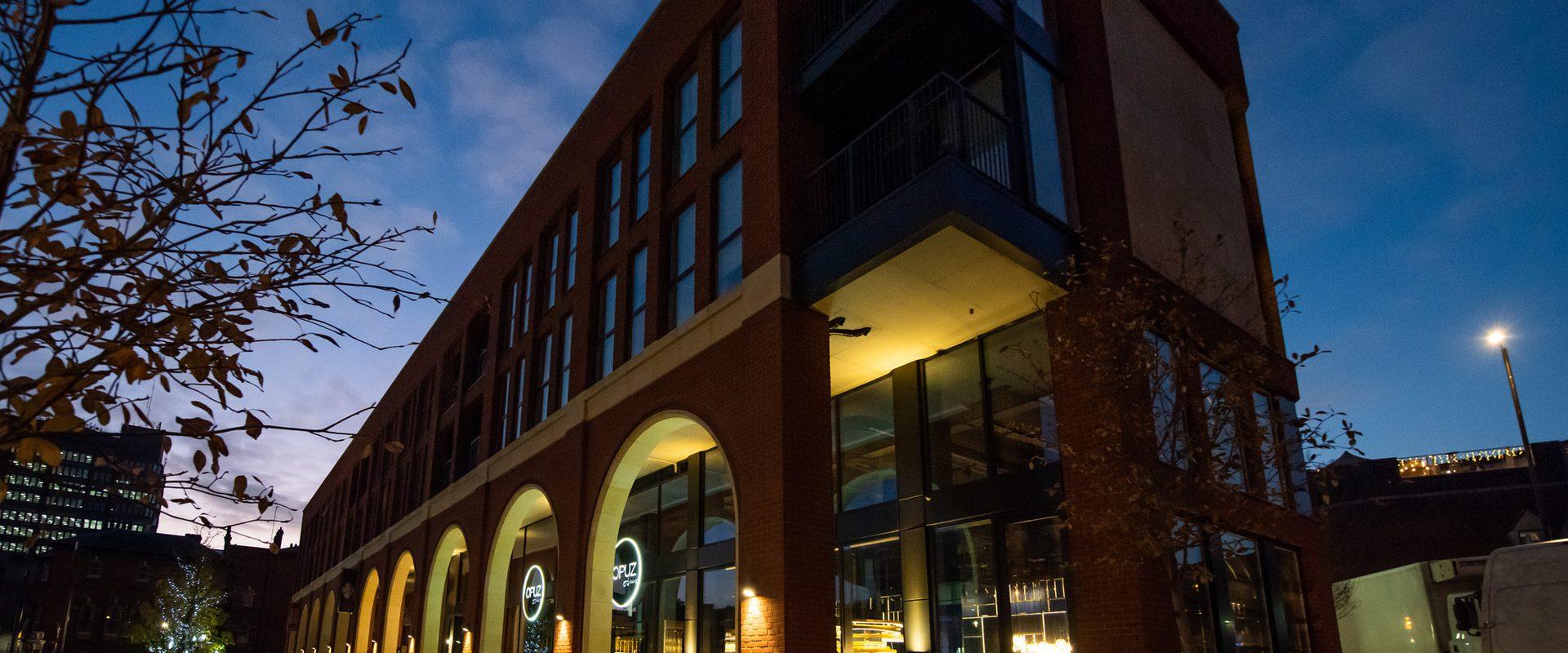
Return to Aylesbury around 5.30pm. The town is quiet by this hour; the Market Square empties, the offices close, and the evening belongs to the restaurants and the theatre. This is where we'd suggest dinner — we're a five-minute walk from the Square, in The Exchange on Exchange Street. Our kitchen serves Modern Turkish dishes, drawing on the Mediterranean tradition we were raised in, and we tend to see a mix of theatre-goers, couples who have spent the day at Waddesdon, and the occasional Bicester Village shopper who has taken our advice and driven the twenty-two minutes east to eat properly.
Practical Notes for Visitors
A few things worth knowing before you come.
Parking in the town centre is plentiful but paid — Exchange Street, Friarscroft, and the Waterside are the three most useful car parks. None of them charge much, and none of them require an app more complicated than the standard RingGo.
Aylesbury has a main-line station run by Chiltern Railways, with direct trains to London Marylebone in around an hour. Aylesbury Vale Parkway, two miles north of the centre, has additional services and parking. Both stations are a short taxi ride from the Market Square.
The town's restaurants are clustered around the Square and along Exchange Street and Kingsbury. Reservations are recommended on Fridays and Saturdays, particularly on evenings when the Waterside has a show on.
And Bicester Village, for those planning a combined trip, is seventeen miles west on the A41 — about twenty-two minutes by car. If you are coming to the region for the outlets and wondering where to eat, we've written a separate guide for exactly that question.
A Final Word
Aylesbury is not a grand town. It has no cathedral, no university, no great museum competing with London. What it has is a fifteenth-century pub still pulling pints, a Rothschild house ten minutes away, a children's gallery that is better than it needs to be, and a market square that has been a market square since the thirteenth century. It is the kind of place that rewards slowing down.
If you come, let us know you read this. We will know where you have been, and we will have kept the courtyard table free.